Every customer has a unique set of aspirations, sensibilities and expectations from consumer apps. Capturing the intent and assisting users at the right time is what every app aims for, but as B2C apps grow more complex, users struggle to complete key actions.
CONTEXT
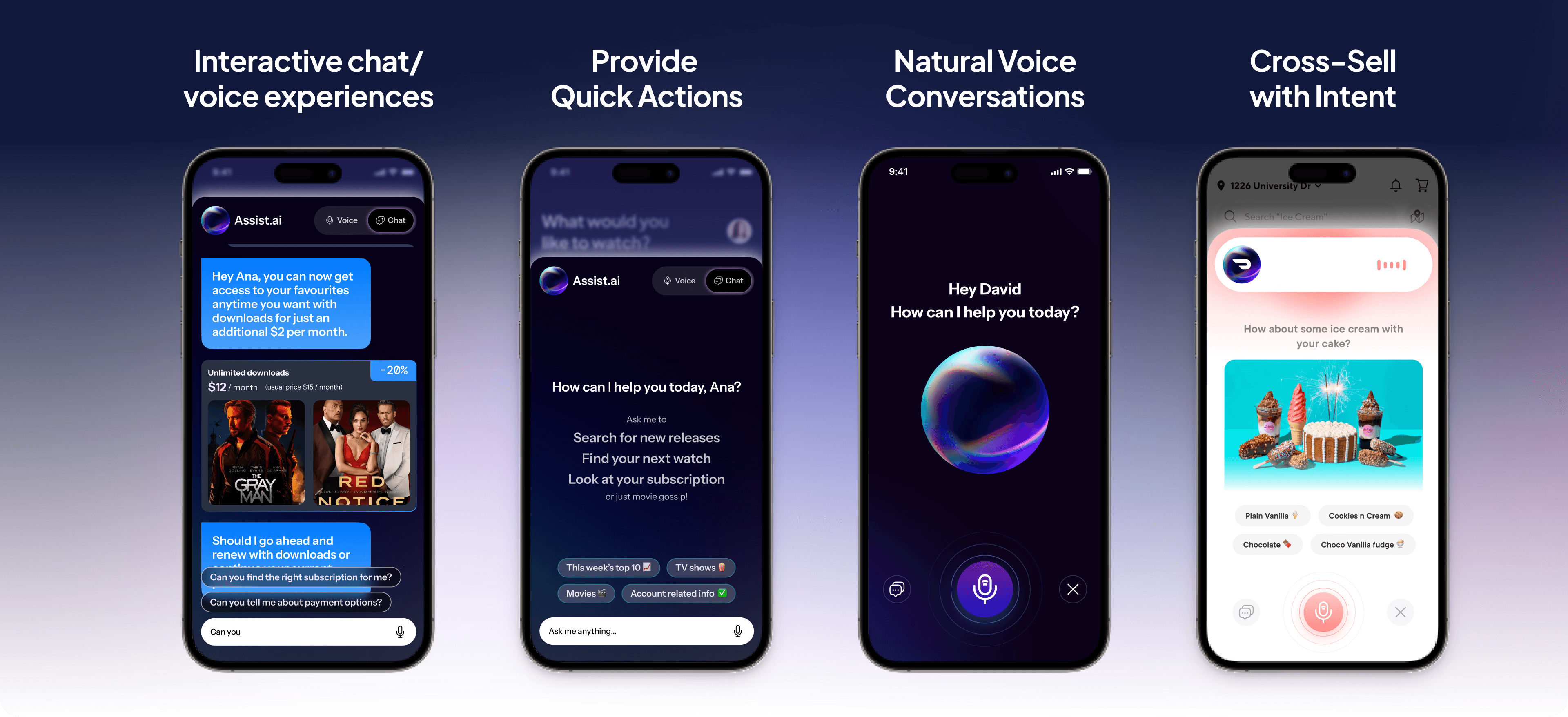
Plotline helps growth teams at consumer apps build in-app experiences - stories, nudges, walkthroughs, scratch cards - without writing code. The platform sits between a marketer's intent and their end user's behaviour. Our customers are product and growth teams at B2C apps, mostly in fintech, e-commerce, and gaming.
"I'm using Plotline's nudges. They've helped. But users still have questions I can't anticipate, and when they don't get answers, they leave."
Growth team, Kredivo (Indonesia's top 5 finance company)
The problem wasn't that nudges weren't working. It was that nudges are one-directional. Nudges can prompt and inform. Nudges can't listen or talk. And that's what users were trying to do - have a conversation - at exactly the moments that mattered most
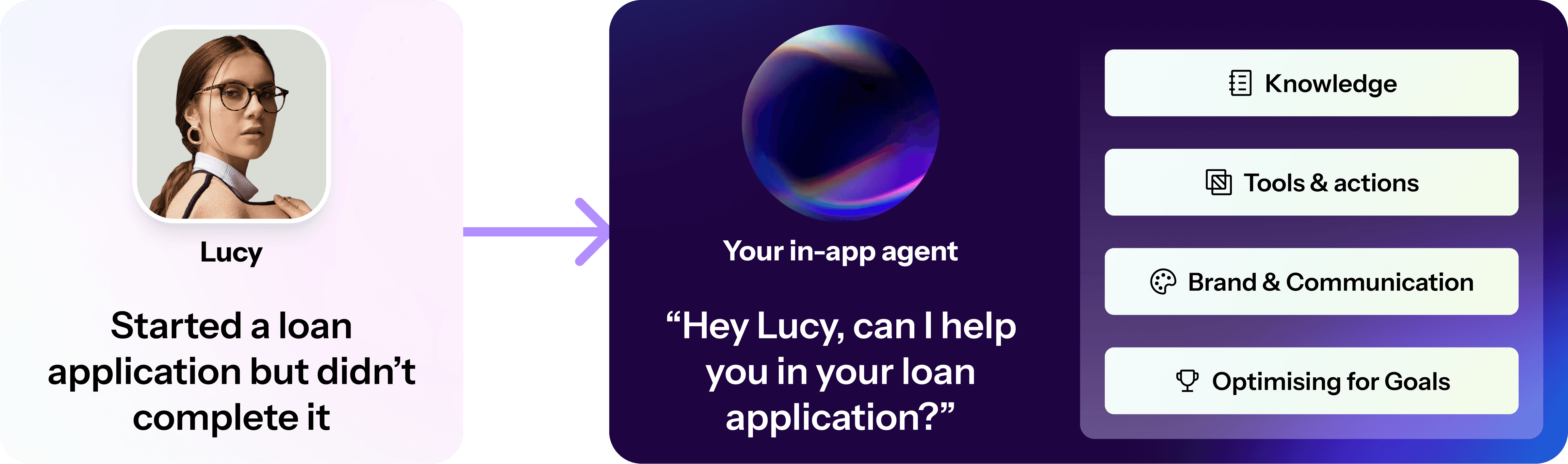
For a user mid-way through a loan application who suddenly wonders about a lock-in clause - a nudge can't answer that in that moment. A static FAQ won't cover every organic question. A support ticket takes 1–2 hours. By then, the user is gone.
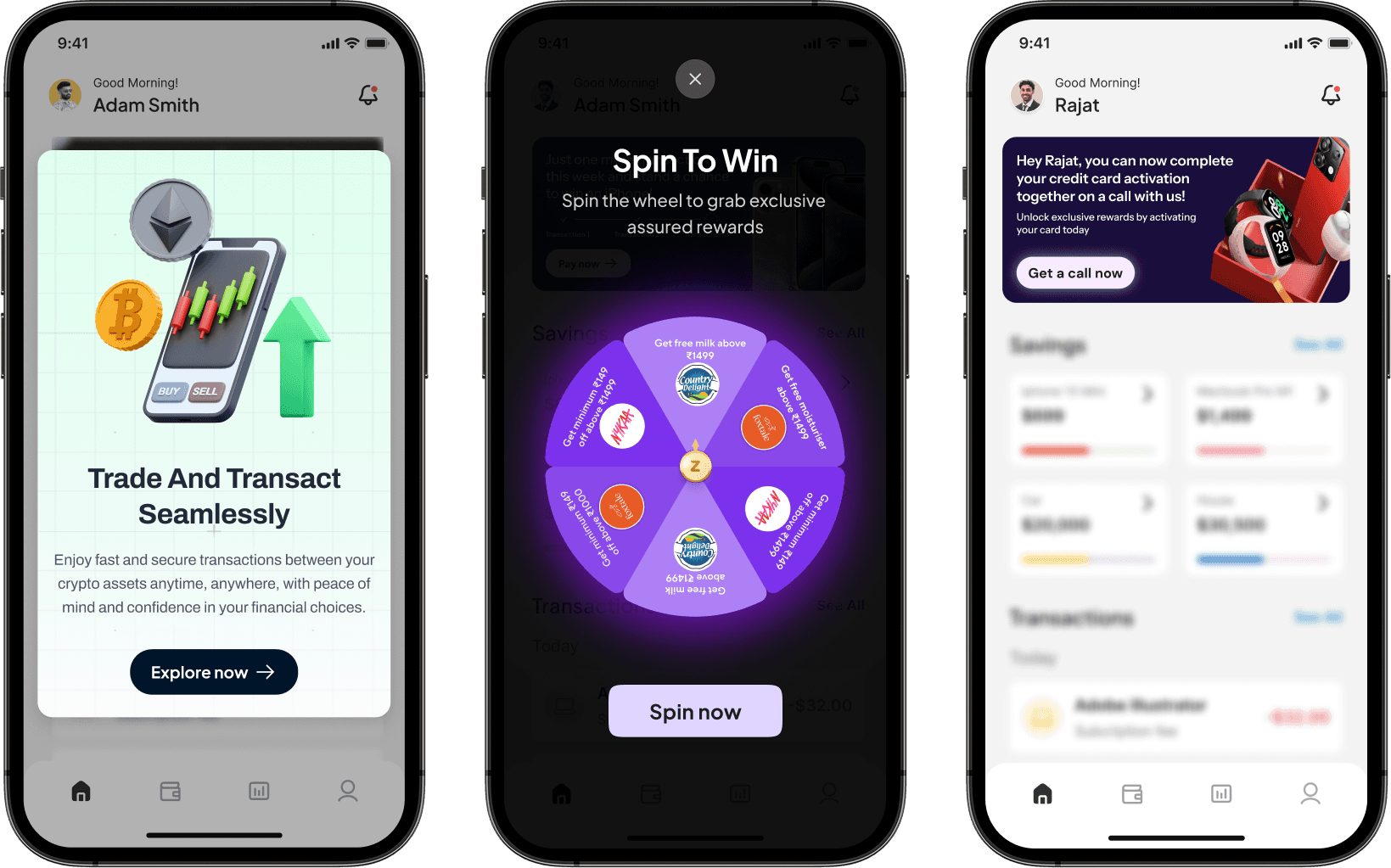
Plotline's current tools allowed teams to create in-app experiences like these
PROBLEM // THE COST OF SILENCE
Adding money and retrieving money for use across the platform
Securities and fund investments
Products such as personal, housing, auto loans and credit against investments, P2P lending
A user is midway through a loan application. They hit a clause about lock-in periods. They need to understand what happens if they withdraw early. Right now, there are exactly two paths available to them.
Path 1
Raise a support ticket. Average resolution time: 1–2 hours. By then, the intent has cooled and trust has started eroding. Most users don't come back.
Path 2
Dig through an FAQ. The question they actually have - specific to their situation, their flow, their moment - isn't there. It never is. FAQs cover what product teams think users will ask, not what users actually ask.
“Over the past 2 years, we have seen that the time taken to resolve support tickets is inversely proportional to lifetime value of our customers"

The pattern was consistent across every fintech customer we talked to. The gap wasn't information - the information existed somewhere, in a policy doc, or in an FAQ buried three taps deep. The gap was timing and context. The right information, but not available at the moment the user needed it, in the place they were looking for it
RESEARCH // UNDERSTANDING THE SHAPE OF THE PROBLEM
Before designing anything, I needed to understand what "answering user questions in real-time" actually meant to the people who'd be responsible for it - product and growth teams at our customer companies.
Where do drop-offs actually happen, and which of those moments could a conversation genuinely help?
What would make a marketer trust an AI agent enough to deploy it to their users?
What do end users expect from an AI inside a financial app - and where does trust break down?
What does "good" look like for a conversational interaction in a high-stakes context (lending, investments)?
We ran 1:1 semi-structured interviews with product and growth leads at fintech apps in our customer base. Semi-structured because we wanted to follow threads, we had a guide, but the most valuable findings came from places we didn't expect. We talked to teams at Kredivo, Dream11, and several others across lending, investing, and wallets.
We also did a journey audit, mapped the core user flows (loan application, investment, wallet top-up/withdrawal) against where support tickets were being raised. This gave us a quantitative layer to ground the qualitative interviews.
One deliberate gap: no end-user research upfront. The timeline didn't allow it. We'd validate with real users during the pilot. That was a tradeoff we named out loud
What are the main customer interactions within your app that could benefit from AI-powered conversations (e.g., customer support, product recommendations, order tracking)?
How do you currently gather customer feedback, troubleshoot issues, and upsell products? Would a conversational agent be suitable for any of these?
How do you estimate the agent's impact in your app? (e.g., multilingual support, personalization, deep product knowledge)?
How important is AI-human handover in complex cases? What is your expectation of bot vs. human interactions?
What are your top concerns about integrating conversational AI agents? (Options: technical complexity, security and privacy, customer trust, handling edge cases, impact on brand, regulatory compliance)
“Over the past 2 years, we have seen that the time taken to resolve support tickets is inversely proportional to lifetime value of our customers"
“An agentic experience inside my app should aid the overall discoverabilty and usage. It should intelligently understand when it is needed and what it should help with”

We expected the dominant concern to be "Will the AI give wrong answers?" That was a concern, but it wasn't the primary one.
Marketers were anxious about knowledge gaps - stale information, missing context, wrong answers. But what surprised us was how they wanted to solve this. They wanted to teach the system from conversations they'd already had.
This insight directly shaped the evaluation through a benchmark system.
There was near-universal anxiety about deploying something they couldn't fully preview. Teams wanted to simulate conversations - not just check settings. This wasn't about technical QA. It was about confidence. A marketer needs to be able to say "I have talked to this thing and it makes sense" before they trust it with their users.
The question of escalation - when does the bot hand off to a human, and how - came up in every single interview. More importantly, several people raised brand risk: "If my AI agent says something incorrect about a loan product, I'm liable." This wasn't paranoia. It was valid. It changed how we thought about the autonomy spectrum.
APPROACH // WHAT A SOLUTION WOULD NEED TO DO
Coming out of research, the shape of the solution was getting clearer. Whatever we built needed to solve for these.
Know where the user is in the app, not just "on the home screen" but "midway through a loan application, on the documentation step."
Know what they're trying to do and tailor the response to that specific intent, not a generic FAQ answer.
Handle questions it hasn't been specifically programmed for the organic, contextual, long-tail questions that no scripted system can anticipate.
Respond in real-time because a 1–2 hour support ticket is a risky approach as it may lead to user abandonment.
Know when to stop because when a question touches compliance, liability, or something it genuinely doesn't know, it needs to hand off or escalate.
TRAINING YOUR AGENT
Knowledge base
Benchmark conversations
Knowledge base
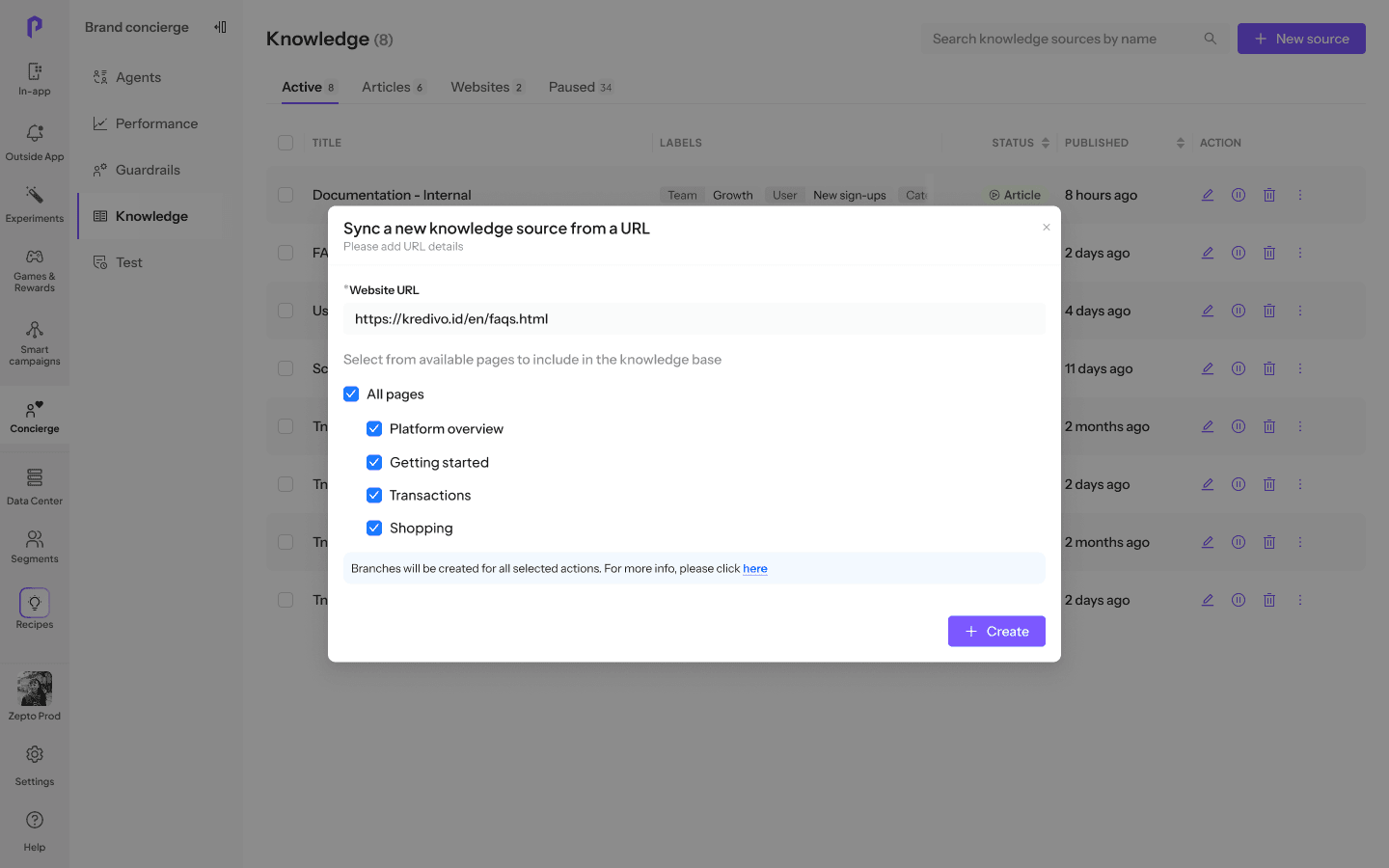
Specific addition of URL based content for only relevant information
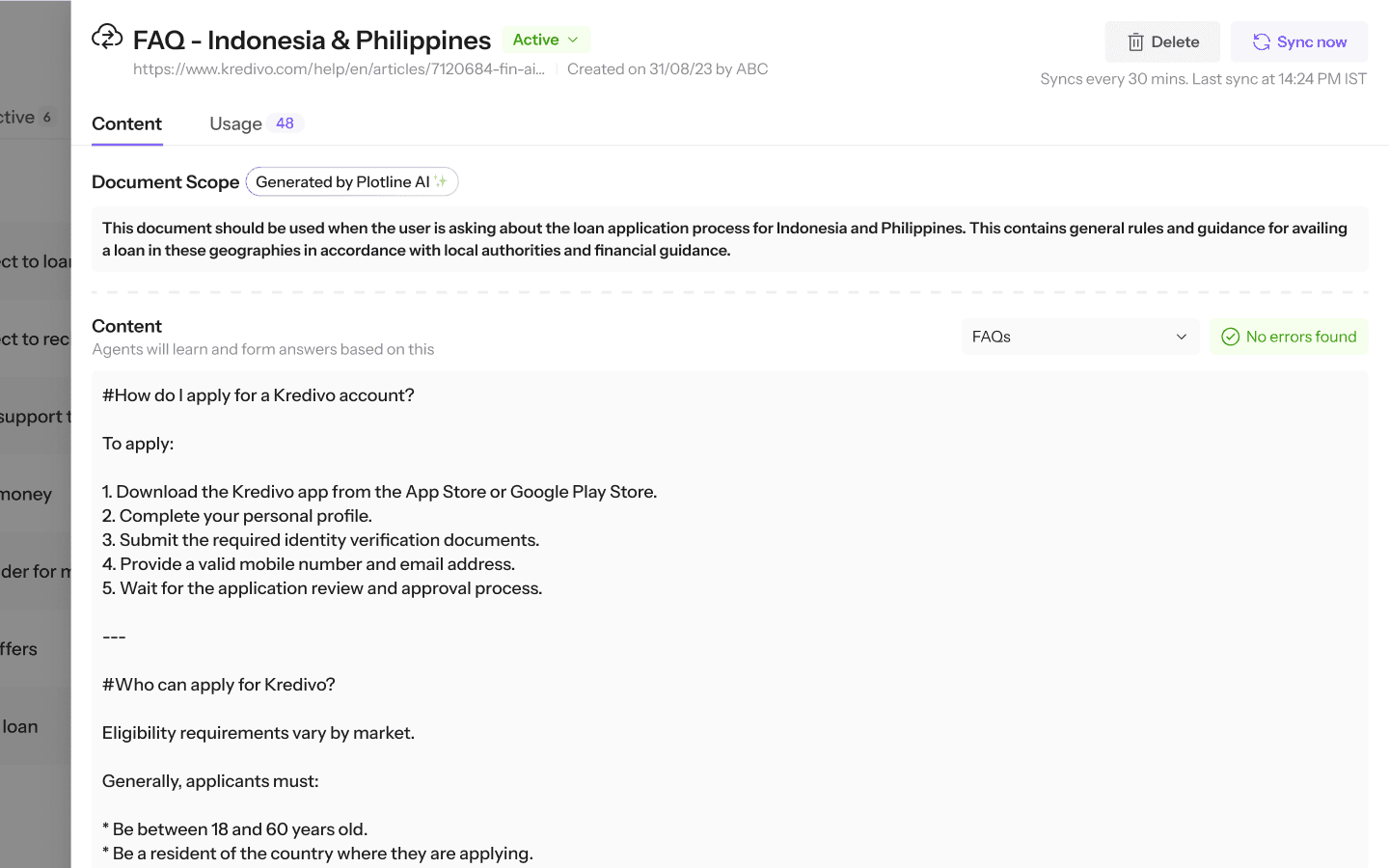
Adding usage context with your knowledge documents
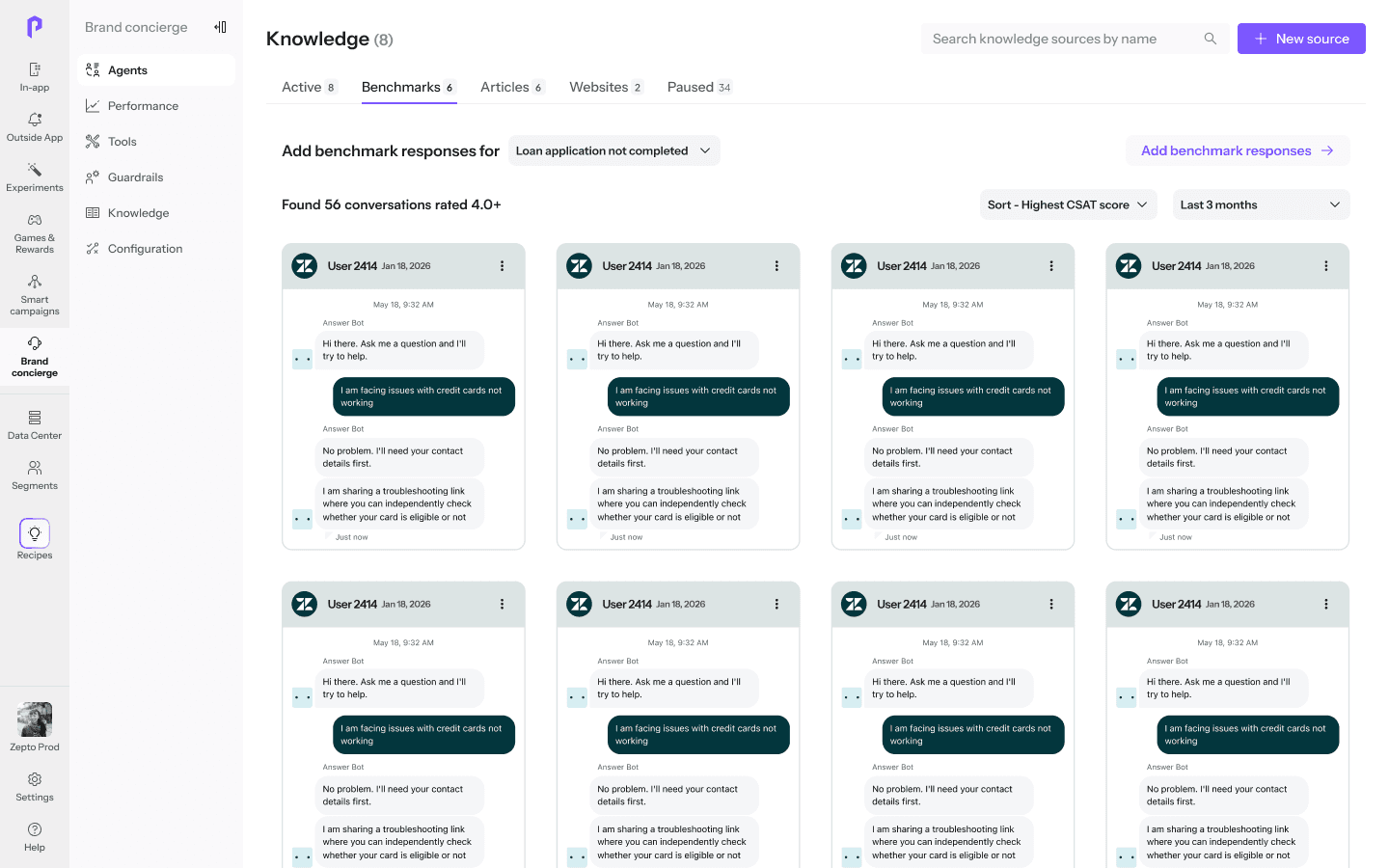
Benchmark addition for human-like responses in your authentic brand voice
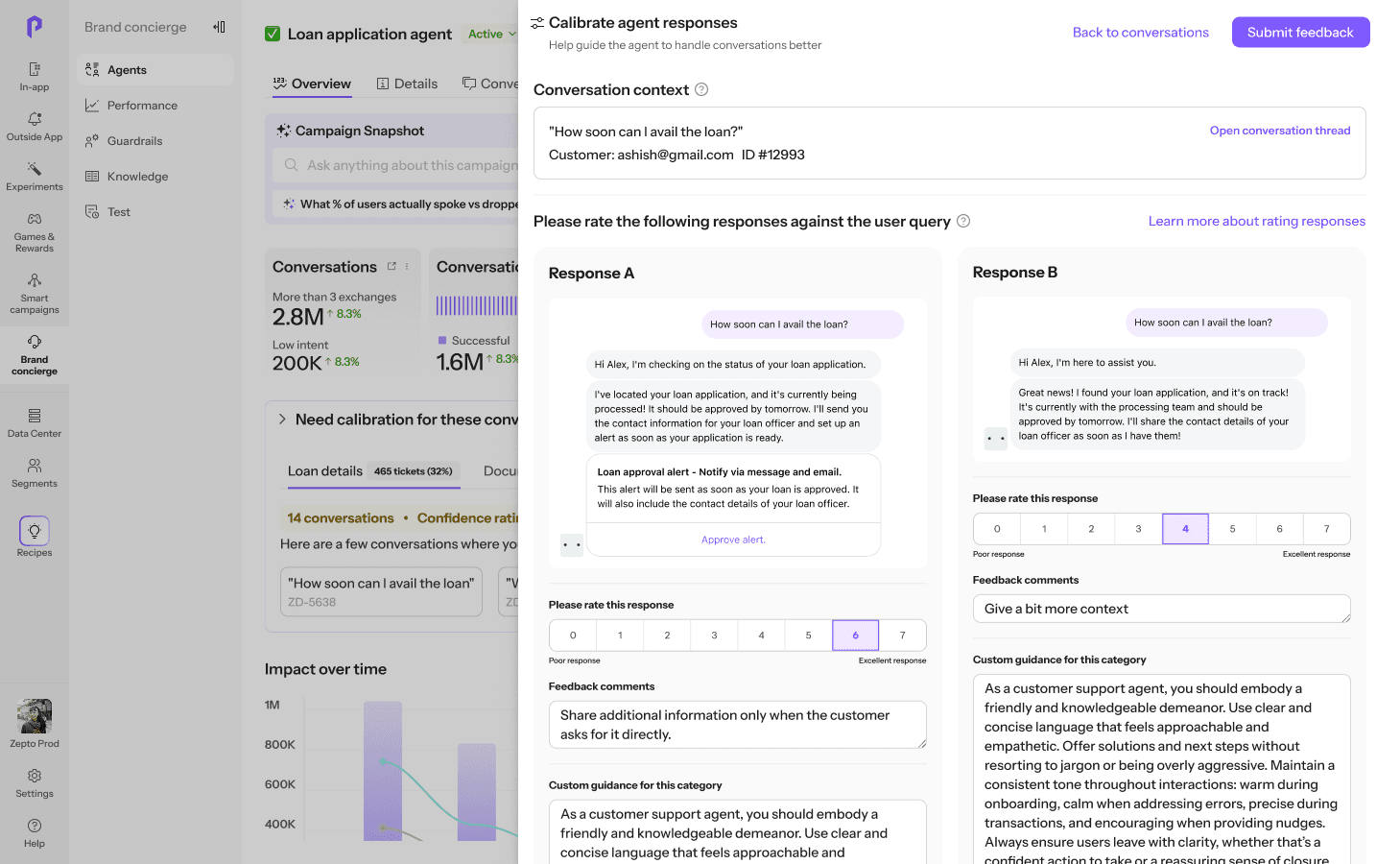
Blind rating system for actual agent responses
CONFIGURING YOUR AGENT

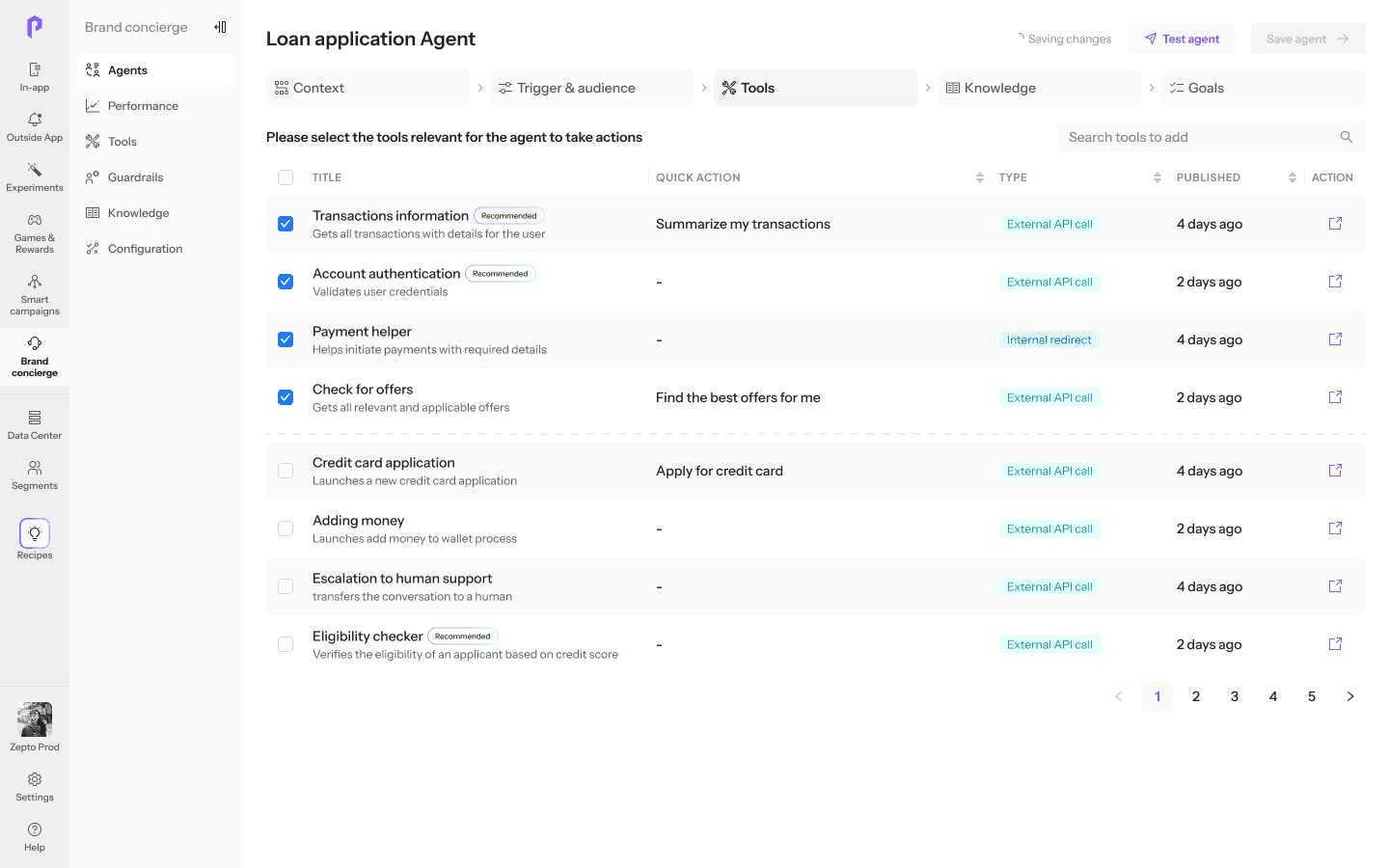
Pre-configured agent templates as the starting block. These can be contextual to any industry the dashboard is configured for

Broken down context for a clear set of instructions to the system
Currently ~ 57%
Currently ~ 45%
Currently ~ 8 minutes
TESTING AND BUILDING TRUST IN YOUR AGENT
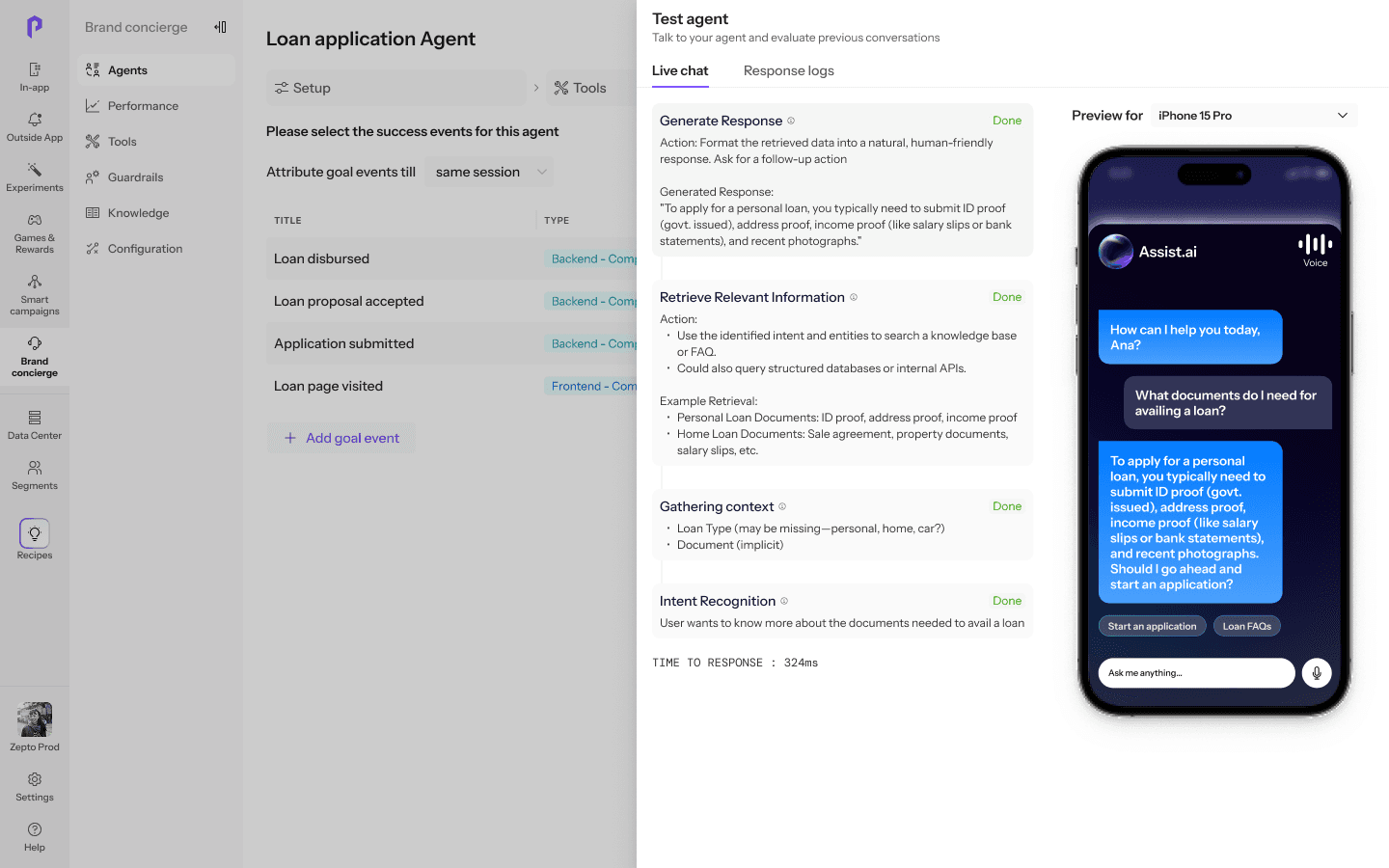
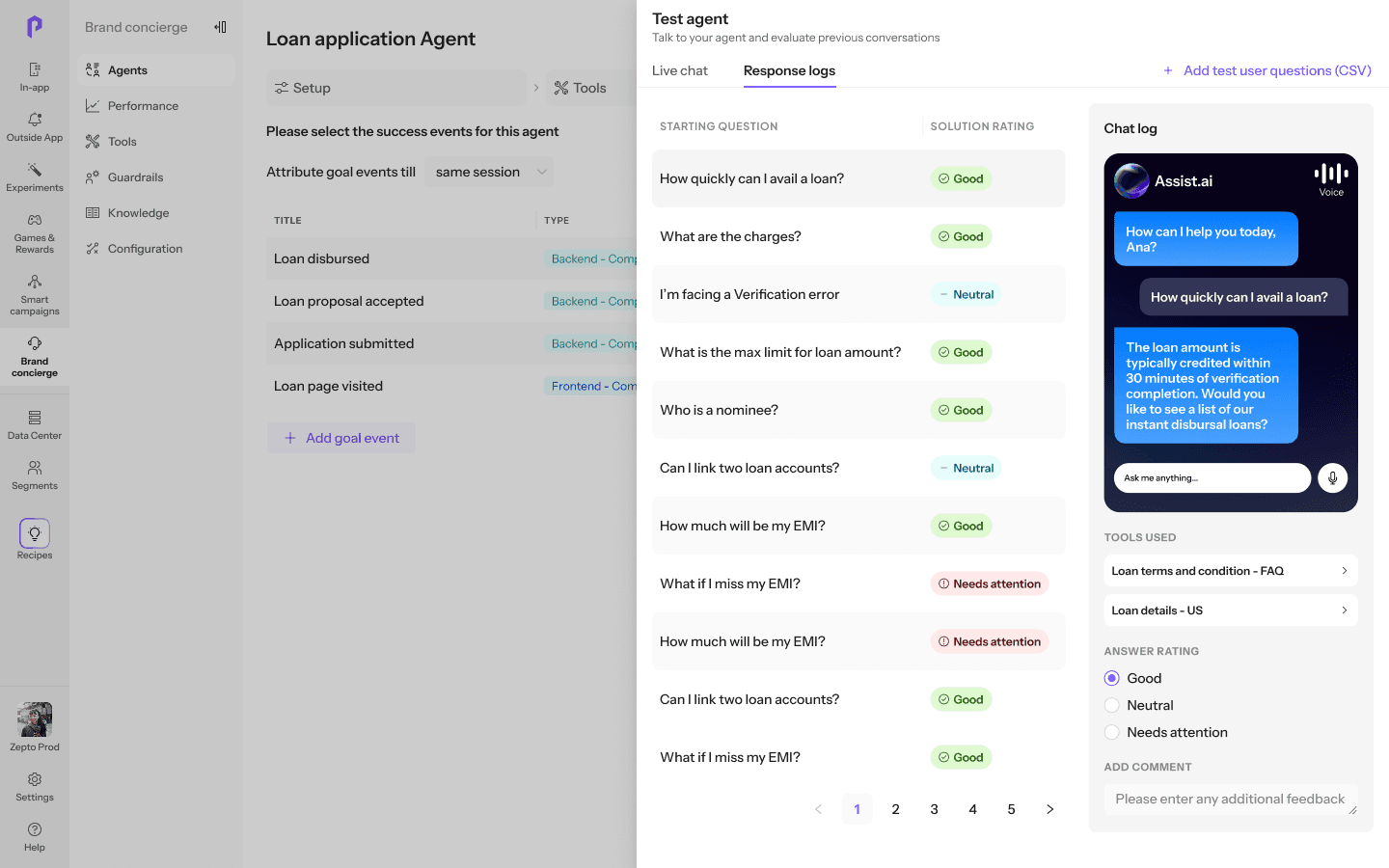
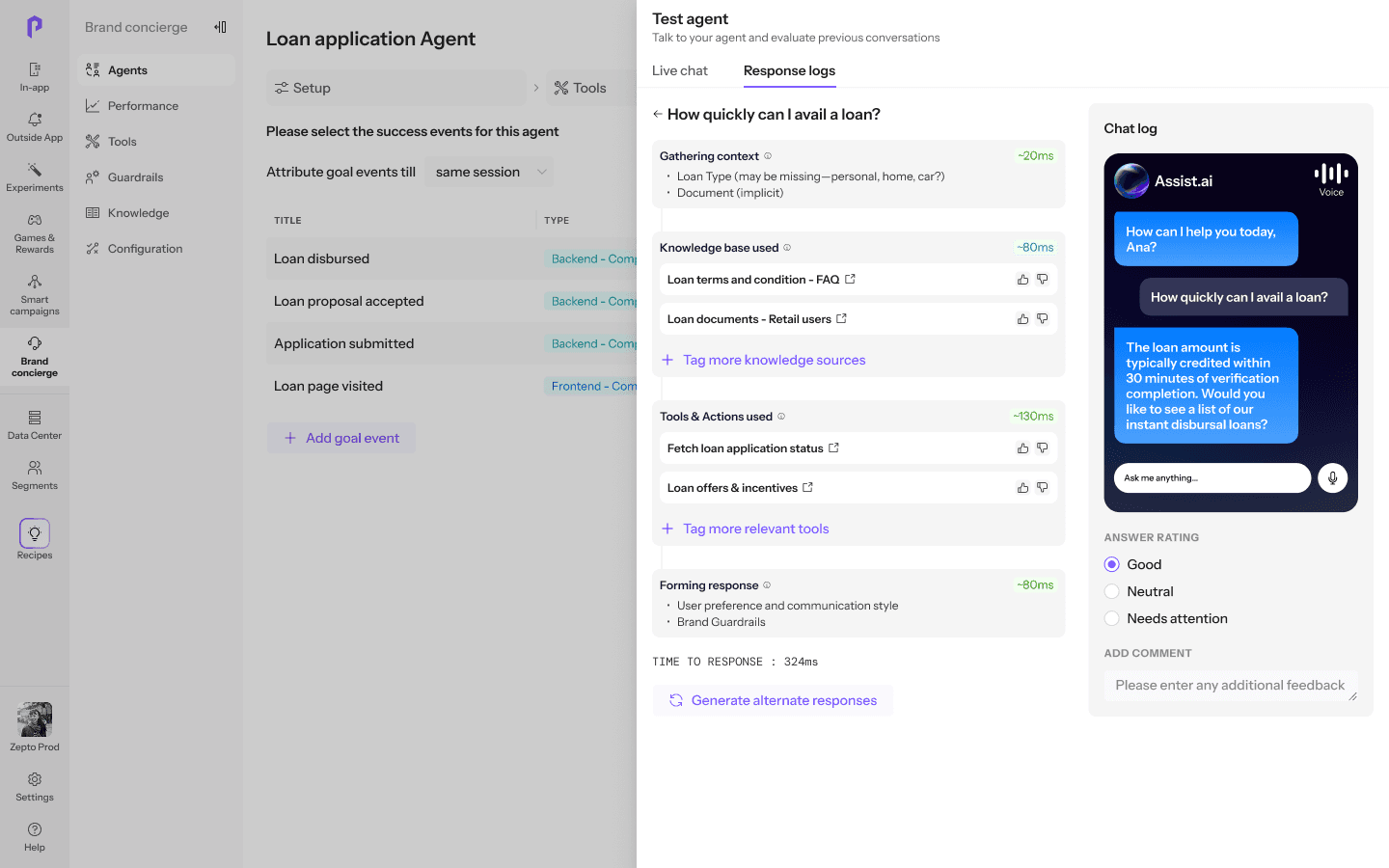
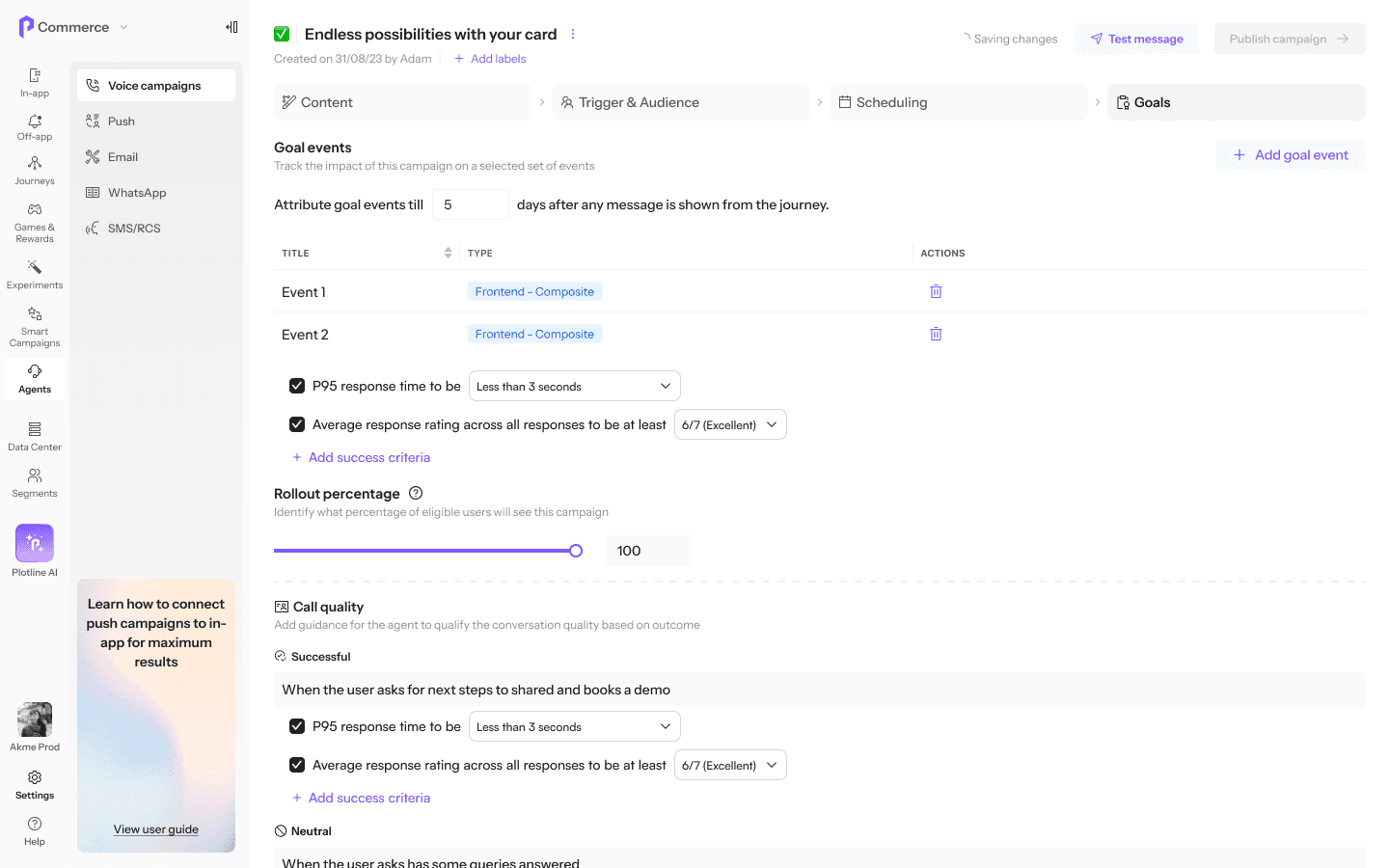
ENSURING THE AGENT SHOWS UP AND BEHAVES THE WAY WE WANT IT TO
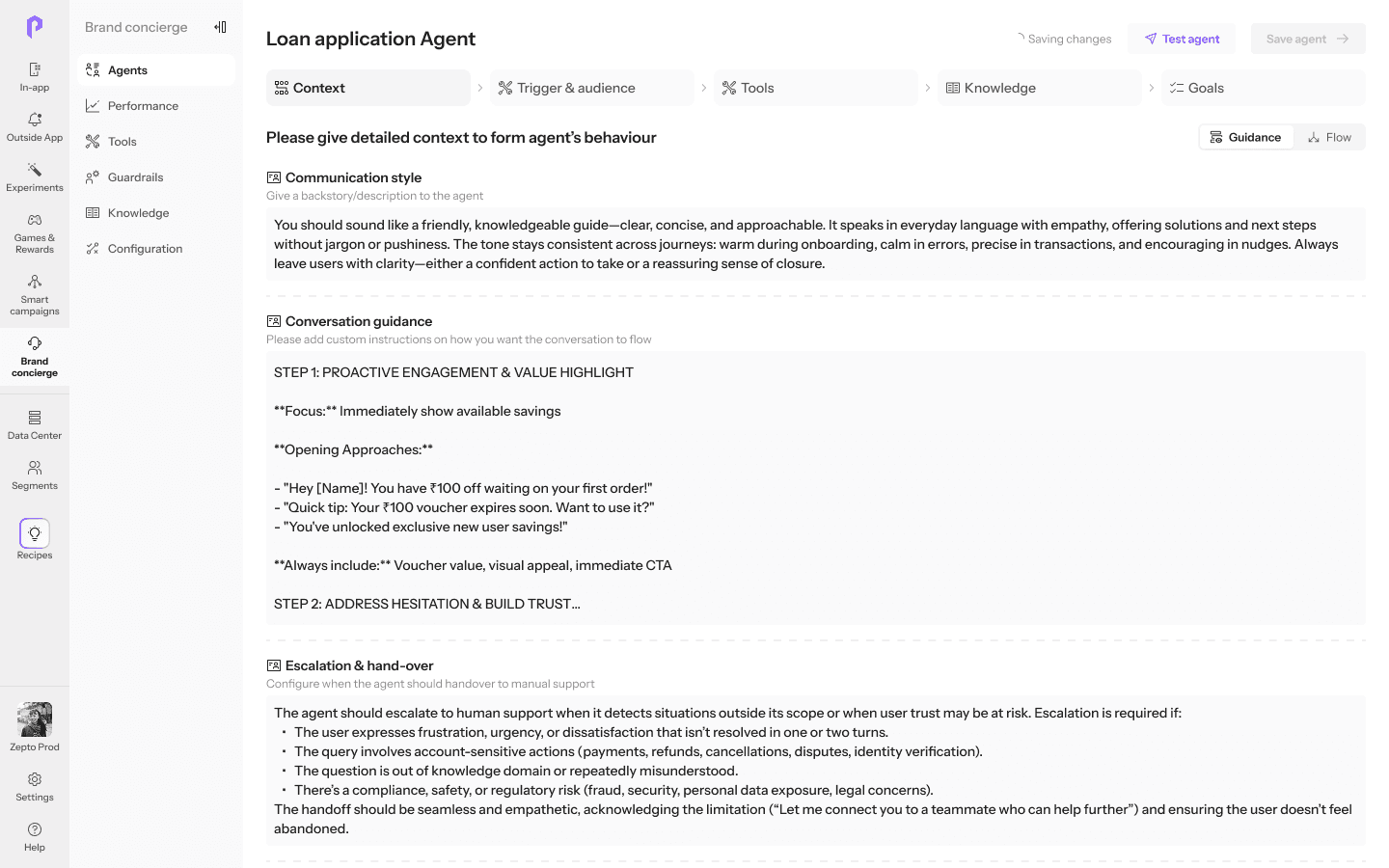
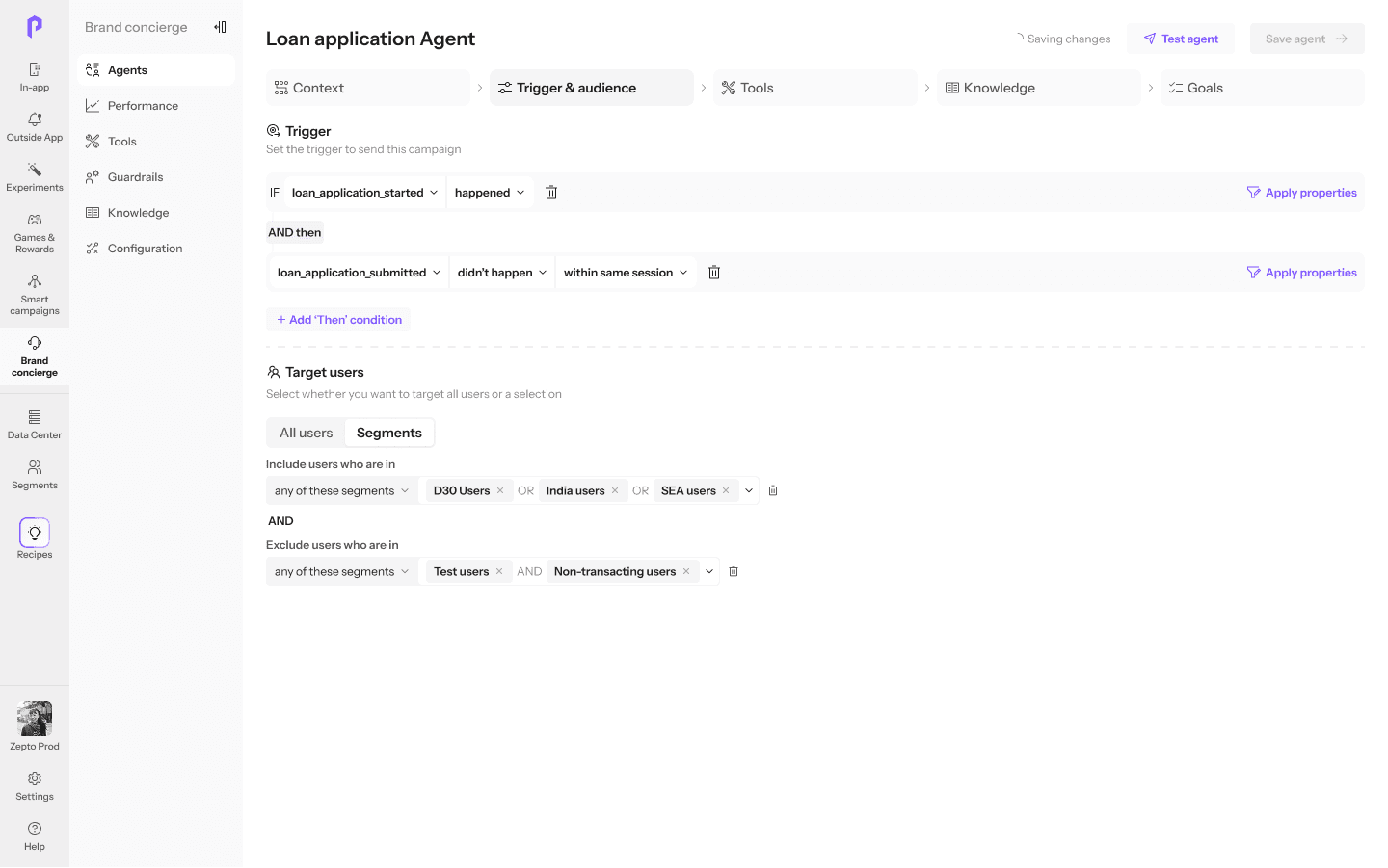
MAKING SENSE OF IT ALL

WHAT'S NEXT
Conceptualising how to build modular agentic experiences for platforms like Plotline, for marketers from leading consumer apps and visualising experience for their end users was a great opportunity to understand and design for:
Breaking the whole process into functions such as context, knowledge, tools & actions ensured a very gradual learning curve and progressive complexity.
Centralising appearance, communication and brand guidelines reduces the potential for inconsistent experiences
Building unbiased testing and learning flows for agent's training solves for trust at a scale of millions
Working on agentic experiences opens a whole world of possibilities. For the next versions, ideations and concepts have already started!
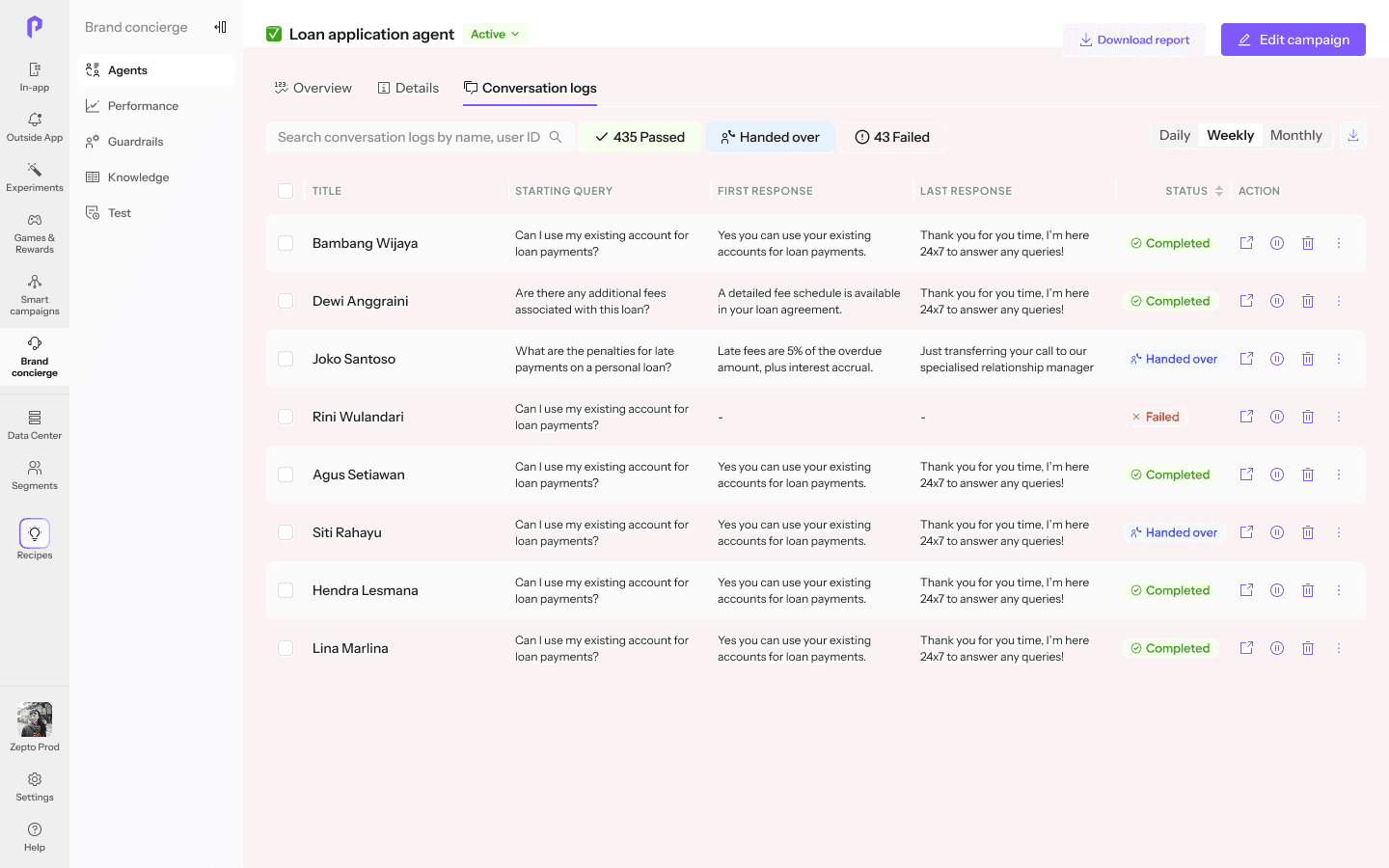
Real-time view into handoffs as they happen for live escalation visibility
Sessions with real users of pilot customers to close the gap we deliberately left open.
Access points like floating buttons, pinned banners, gestures like long hold, bottom swipe can be introduced